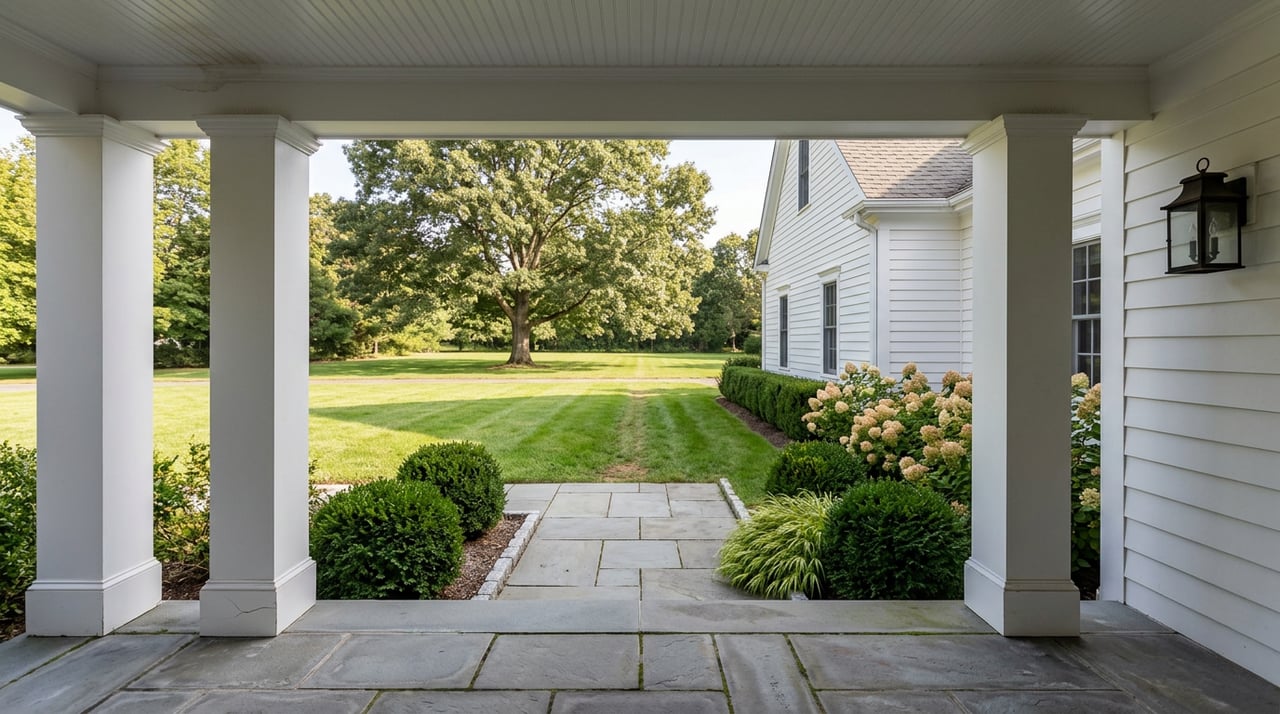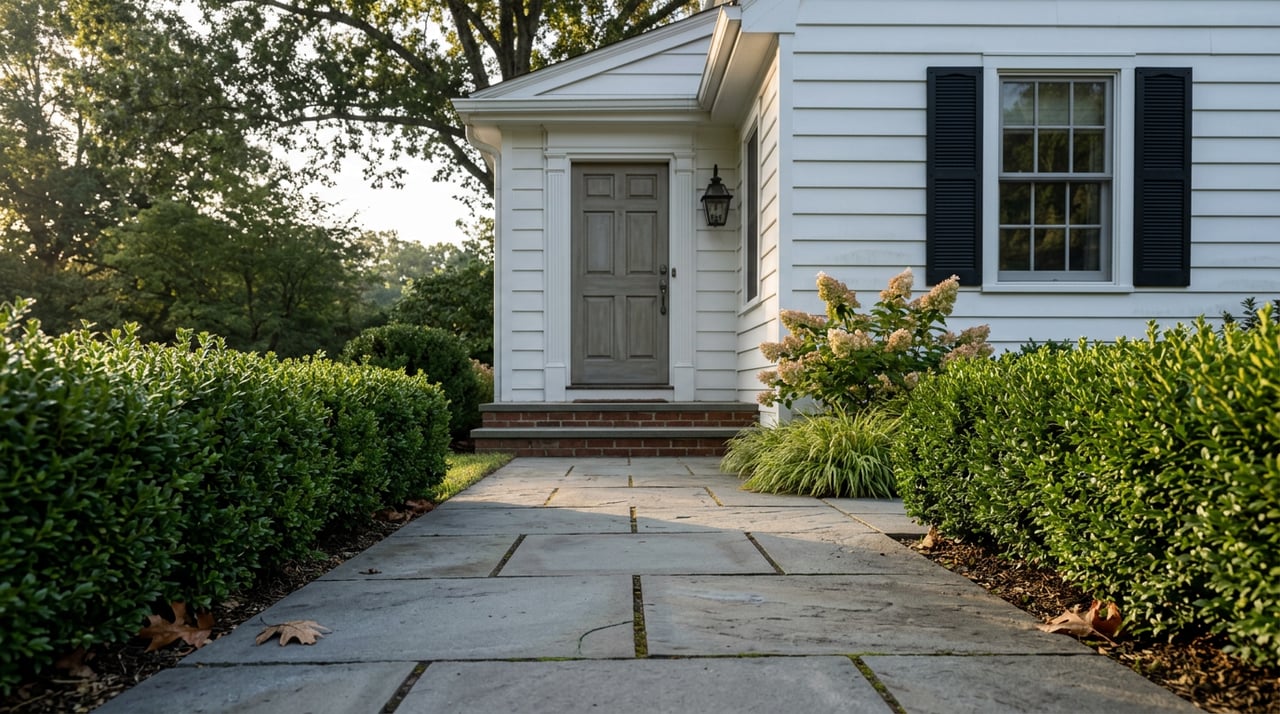
Every third listing in Old Greenwich mentions it. Walk to the train. Steps to Metro-North. Commuter's dream. The phrase does real work in a listing description, and buyers respond to it, often paying up for it without asking what it actually buys them once they own the house and start living the commute instead of imagining it.
Here is the part the phrase leaves out. Old Greenwich station is a local stop. It has no express service to Grand Central. The platforms themselves have no accessible path between them, so if you park on the wrong side some mornings, you are not walking across the tracks to fix it. And if you ever want a guaranteed parking spot instead of feeding the meter, the Town of Greenwich's own waitlist runs three to five years. None of that shows up in the listing photos of a front porch two blocks from the platform.
This matters most for the buyer this neighborhood attracts: the commuting professional who has decided the walk is worth a premium and is now comparing Old Greenwich against downtown Greenwich or Riverside without a clear read on what each walk actually delivers.
The Phrase That Sells the Listing
"Walkable to the train" reads as a single, simple selling point, but it is really shorthand for three separate things: proximity, speed, and access. Old Greenwich delivers the first one reliably. Homes near Sound Beach Avenue and the village core genuinely put you a short walk from the platform. That part of the marketing is accurate.
Speed and access are where the phrase starts doing more work than the facts support. A buyer who has only ever compared Zillow's walk score to a train icon on a map has no way to know that walking distance in Old Greenwich is not the same commuting product as walking distance in downtown Greenwich, four stops down the same line.
Local Stop, Not Express Stop
The Greenwich station in the village center runs express trains that reach Grand Central Terminal in around 48 minutes during peak hours. Old Greenwich, Riverside, and Cos Cob are all local stops on the New Haven Line, which means every train that serves them makes every stop along the way. The walk to the Old Greenwich platform might be five minutes shorter than the drive to the Greenwich station, but the ride itself runs longer, because there is no express option departing from Old Greenwich.
For a buyer weighing two houses, one two blocks from Old Greenwich station and one a short drive from downtown Greenwich, the math is not as simple as walk versus drive. It is walk-plus-local-train versus drive-plus-parking-hassle-plus-express-train, and depending on the time of day those two door-to-door totals can land closer together than either listing description would suggest.
The Platform You Can't Walk Across
Here is a detail that never makes it into a listing but should factor into how a buyer thinks about the address. Metro-North's own station page for Old Greenwich notes that the platforms are accessible by ramp, but there is no accessible path between the two platforms, and vehicular drop-off or pick-up is suggested instead. The nearest fully accessible stations on the line are Stamford and Greenwich.
Practically, that means a commuter who parks or gets dropped off on the wrong side of the tracks some mornings cannot simply cross over. It is a small operational quirk of a station built in 1894, added to the National Register of Historic Places in 1989 as the Sound Beach Railroad Station, and it has nothing to do with the house itself. But for a buyer whose daily routine depends on quick, predictable platform access, or for a family managing a stroller, this is exactly the kind of friction that only shows up once you are living the commute rather than reading about it.
The Parking Permit Timeline
The bigger cost of "walkable" shows up when the walk is not always practical. Weather, luggage, an early flight, a late meeting. Sooner or later, most Old Greenwich commuters end up wanting to drive to the station at least occasionally, and that is where the town's parking system becomes part of the real math of the address.
Old Greenwich's railroad station parking permit waitlist runs an estimated three to five years. Until a permit comes through, day parking at the northbound lot costs $7 per day, payable through the Town of Greenwich's Department of Parking Services. That is not a prohibitive cost for occasional use, but it is a meaningful gap between the mental image of "walk to the train whenever I want" and the reality of budgeting for years of day-parking fees or joining a waitlist the day you close, which is exactly what local buyers have learned to do.
Here is how that compares across the two most commonly cross-shopped Greenwich train stations for buyers weighing the walkability premium:
| Old Greenwich Station | Greenwich Station | |
|---|---|---|
| Service type | Local stop only | Express service available |
| Approx. peak ride to Grand Central | Longer, all local stops | About 48 minutes express |
| Platform accessibility | No accessible path between platforms; ramp access only | Fully accessible |
| Parking permit waitlist | Estimated 3 to 5 years | Estimated 5 years (outdoor), 10 years (covered) |
| Day parking rate | $7 per day | Varies by lot |
The table is not an argument against Old Greenwich. It is a way of pricing the walk honestly, so a buyer can decide whether the shorter walk is worth the longer ride and the same multi-year wait for guaranteed parking that every other Greenwich train neighborhood carries.
What Old Greenwich's Pace Does to the Premium
None of this friction has slowed the market down. Old Greenwich remains one of the fastest-moving submarkets in town, consistently trading in under 40 days on market with sale-to-list ratios above 103 percent, meaning homes are routinely selling above asking price. Townwide, the Greenwich Association of REALTORS reported a single-family median sale price of $3,602,000 for July 2026, up 2.49 percent from July 2025, with average days on market falling to 36, a 28 percent drop from the prior year. Old Greenwich, priced at the higher end of that townwide range and moving faster than the town average, sits squarely in the segment where buyers are competing hardest.
That pace is the real reason the walkability premium deserves scrutiny rather than blind acceptance. In a market where homes are already selling above list in weeks, not months, the extra dollars a buyer pays for "walk to train" positioning are dollars competing against every other buyer who has also read the same listing description and made the same assumption. If the commute those extra dollars buy is a longer local ride and the same multi-year parking wait as everywhere else in town, the premium is paying for the walk itself and very little else.
Pricing the Walk Correctly
None of this means walking distance to the Old Greenwich station lacks value. For a household that can genuinely walk on most days, skip the car entirely, and treat the local train's slower pace as an acceptable tradeoff for never touching a parking lot, the premium is buying exactly what it promises. The mistake is paying for that premium while assuming it also buys express-level speed or day-one parking flexibility, neither of which the station delivers.
The more useful question for a buyer comparing Old Greenwich to Riverside, Cos Cob, or downtown Greenwich is not "which one is walkable" but "what does each walk actually cost me in ride time, platform access, and years on a waitlist." Answered honestly, that question often changes which house looks like the better value, even before the offer gets written.
Frequently Asked Questions
Does Old Greenwich station offer express trains to Grand Central? No. Old Greenwich is a local stop on Metro-North's New Haven Line, meaning trains departing from it make every stop along the route. Express service on this line departs from the Greenwich station in the village center.
How long is the wait for a parking permit at the Old Greenwich station? Estimates for the Old Greenwich railroad station lot run three to five years. In the interim, day parking is available at $7 per day through the Town of Greenwich's Department of Parking Services, and adding your name to the waitlist as soon as you close is common practice among new residents.
Can I walk between the two platforms at Old Greenwich station if I park on the wrong side? No. Metro-North's own station information notes there is no accessible path between the two platforms, though each is reachable by ramp, and vehicular drop-off is the suggested workaround.
Understanding what a walkable address actually buys you, and what it doesn't, is the kind of detail that separates a house you love in photos from a commute you can live with every day. If you are weighing Old Greenwich against another Greenwich neighborhood, or trying to figure out what your own walk to the train is really worth on paper, Nora Giovati can walk you through the comparison block by block. Show me homes or list my property, contact Nora today.