If you picture outdoor living in Greenwich as just a patio and a grill, you may be missing what makes this shoreline lifestyle so distinctive. Along a harbor area with about 27 miles of irregular shoreline and 30 islands, outdoor space is often shaped as much by water access, views, and changing weather as by square footage alone. If you are dreaming about a more polished backyard, terrace, or porch, these Greenwich coastal home ideas can help you create spaces that feel beautiful, practical, and true to the setting. Let’s dive in.
Why Greenwich Outdoor Living Feels Different
Greenwich has a strong coastal identity, and that shows up in the way homes connect to the outdoors. The town’s harbor management plan describes a shoreline used for residential, recreational, commercial, and open-space purposes, with shore neighborhoods and villages including Cos Cob, Old Greenwich, and Byram.
That context matters when you think about design. In Greenwich, outdoor living is not only about a private lawn or garden. It is also about boating, water views, beach access, and spaces that support an easy flow between home and shoreline activities.
Town amenities reinforce that lifestyle. Greenwich Point Park in Old Greenwich includes beaches, walking trails, picnic areas, a boat yard, and a launch for boats and kayaks, while other waterfront facilities include Byram Park, Cos Cob Marina, Grass Island Park, and Island Beach.
Build Outdoor Rooms, Not One Open Space
One of the best ideas you can borrow from Greenwich coastal homes is to think in zones. Instead of treating your outdoor area as one large surface, break it into purposeful spaces that support how you actually live.
Recent outdoor trend data shows that many homeowners are investing in features that make exterior areas feel more like interior rooms. Shade structures, screened porches, outdoor kitchens, and upgraded lighting all support the idea that outdoor space works best when it feels intentional.
This approach fits Greenwich especially well because coastal properties often need to balance openness with shelter. A well-planned layout can give you places to gather, dine, relax, and move through the property without making the yard feel crowded.
Smart zones to consider
- A dining terrace near the house for easy indoor-outdoor meals
- A lounge area with flexible seating for conversation and quiet mornings
- A partially covered space for shade and light weather protection
- A fire feature area for cooler evenings
- A transition path or terrace that guides movement toward a lawn, dock, or water-facing edge
Add a Covered Dining Area
Greenwich’s climate makes covered outdoor space especially useful. Nearby NOAA climate normals for Stamford show an average high of 38.0°F in January and 84.8°F in July, which means outdoor areas need to handle both summer heat and cooler shoulder seasons.
A covered dining area can extend how often you use the space. It can also make outdoor entertaining feel more comfortable when the weather shifts, whether that means stronger sun in midsummer or a cooler breeze in spring and fall.
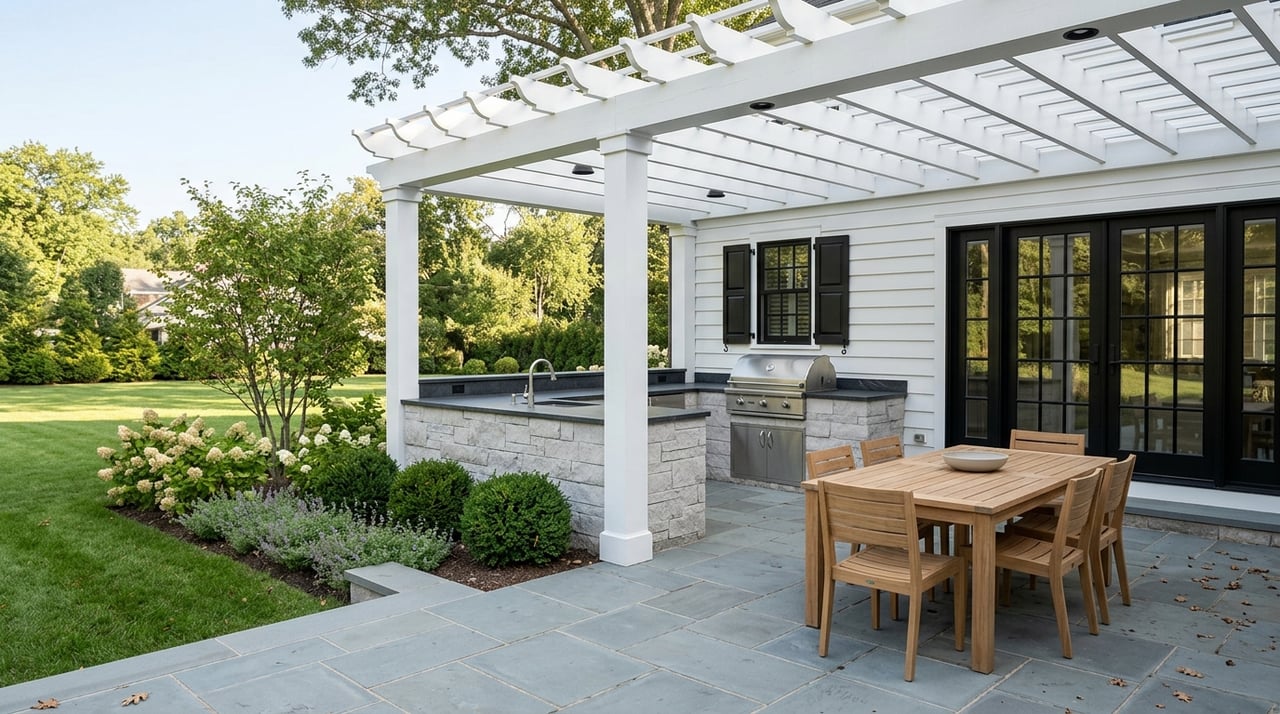
For many homes, this does not have to mean a large structure. A pergola, a roof extension, or a simple partially sheltered terrace can add definition and comfort while keeping the space visually open.
Use a Screened Porch for Coastal Comfort
A screened porch is one of the most versatile features you can add to a Greenwich-style property. It gives you fresh air and a stronger connection to the landscape while also adding a layer of protection from wind and seasonal nuisances.
This idea works especially well for homes that want a softer transition between interior living areas and the yard. A screened porch can function as a morning coffee spot, a reading room, or an overflow entertaining space when guests move between indoors and out.
From a design standpoint, it also suits the classic New England character seen across much of Greenwich. It can feel timeless, practical, and refined all at once.
Layer Terraces for Slope, Views, and Flow
Many coastal properties benefit from more than one outdoor level. Layered terraces can help organize the site, especially when you want to preserve views, manage circulation, or create a gradual connection between the house and the landscape.
This is a strong fit for Greenwich because the best outdoor spaces often do more than decorate the backyard. They help you move through the property in a natural way, whether that means stepping from the house to a dining terrace, then down to a lounge area, and finally toward open lawn or water-oriented features.
Layering can also make a larger property feel more usable. Each terrace can serve a distinct purpose without competing with the others.
Ways layered terraces can work
- An upper terrace for dining close to the kitchen
- A middle terrace for lounging and conversation
- A lower terrace or lawn edge for open views and quieter seating
- Built-in steps and retaining elements that guide movement cleanly
Make Seating Feel Built In
Built-in seating is a useful idea for coastal-inspired outdoor spaces because it adds function without clutter. It can help define a terrace edge, frame a fire feature, or create a natural gathering area that feels integrated with the architecture.
In Greenwich-style outdoor design, that sense of polish matters. Clean lines, durable materials, and thoughtful placement can make the whole space feel more tailored and easier to use for both everyday life and entertaining.
Built-in seating can also support better circulation. Instead of filling a terrace with too much furniture, you can keep the layout more open while still giving guests plenty of places to sit.
Plan Lighting Early
Lighting is often what turns a nice backyard into a space you actually use at night. Outdoor trend research shows that lighting upgrades are especially common, and that makes sense for Greenwich homes where evenings on a terrace or porch are part of the appeal.
A layered lighting plan helps your outdoor space feel warmer, safer, and more functional. It can also highlight architectural details, steps, seating walls, and planting beds without overpowering the setting.
The goal is not to make the yard feel bright like a parking lot. Instead, aim for gentle, well-placed lighting that supports dining, movement, and atmosphere after dark.
Lighting ideas that fit the setting
- Step lights for safer circulation
- Soft downlighting near seating and dining areas
- Accent lighting for stone walls or planting beds
- Subtle path lighting to connect outdoor zones
Choose Coastal-Smart Planting
Landscaping along the Connecticut coast has to do more than look good. UConn Extension notes that coastal properties must often handle salt spray, strong wind, direct sun, sandy or droughty soils, and in some places saline or poorly drained conditions.
That is why a Greenwich-inspired planting plan should focus on resilience as much as style. Native and salt-tolerant trees, shrubs, perennials, and vines can be a better fit for shoreline conditions than more delicate ornamental choices.
UConn also advises against relying on lawn alone between the house and the water. A more layered planting approach can help your landscape perform better while still preserving views and access.
Coastal planting principles to keep in mind
- Use native or salt-tolerant plants suited to site conditions
- Keep lower plantings closer to view corridors when possible
- Add stronger structural planting farther inland for balance
- Prioritize durability in windy, sunny, or sandy areas
For dune settings, UConn highlights native species such as American beach grass, seaside goldenrod, and beach pea. Those examples may not fit every property, but they offer a helpful picture of the coastal palette and texture that can inspire a more natural shoreline look.
Balance Views With Privacy
One of the most appealing parts of a coastal home is the connection to the landscape. At the same time, outdoor spaces usually work best when they offer a sense of comfort and separation.
This is where thoughtful layout matters. Instead of blocking everything with tall plantings or heavy structures, many well-designed Greenwich outdoor spaces create privacy through layered seating areas, partially covered zones, and strategic placement of plant material.
That approach helps preserve openness while still making the space feel intimate. It is often a better fit for coastal properties than trying to wall off the yard.
Design for Weather and Resilience
In Greenwich, outdoor living should be both enjoyable and durable. The town’s Coastal Resiliency Assessment focuses on sea-level-rise impacts on town-owned and managed facilities and tidally impacted ponds, which is a reminder that long-term adaptability matters in shoreline communities.
For homeowners, that can mean thinking carefully about drainage, elevation, materials, and how different outdoor features will perform over time. Even lifestyle-driven upgrades benefit from a practical lens.
The most successful spaces usually do both. They deliver the relaxed, elegant feel buyers love while also respecting the realities of a coastal environment.
Know the Permit and Review Basics
Before starting a major outdoor project, it is smart to understand what may require review. Greenwich’s building inspection guidance states that permits are required for exterior decks, new pools or spas, retaining walls over 3 feet, and fences over 7 feet, among other exterior changes.
The town also notes that FEMA flood maps are the only documents that legally determine flood-zone status, and the Coastal Overlay Zone is governed by Greenwich’s Building Zone Regulations. If your property is near the water, these details can shape what is feasible.
At the state level, Connecticut DEEP regulates work in tidal wetlands and in tidal, coastal, or navigable waters. DEEP says major work and new construction generally require an individual permit, while some minor activities may qualify for general permits, and it strongly recommends a pre-application meeting.
What Buyers Notice Most
If you are updating a home with future resale in mind, focus on features that make the outdoor experience feel easy, polished, and connected to the setting. Buyers tend to respond to spaces that feel like a natural extension of the home rather than an afterthought.
In Greenwich, that often means a strong indoor-outdoor flow, functional entertaining areas, weather-aware design, and landscaping that suits the shoreline environment. Even simple improvements can have a stronger impact when they support the lifestyle people are hoping to find here.
For sellers, presentation matters too. Outdoor spaces photograph best and show best when they feel edited, purposeful, and ready to enjoy.
If you are thinking about how outdoor living can elevate your property in Old Greenwich or elsewhere in town, working with a local expert can help you focus on the improvements that fit both the home and the market. To show me homes or list my property, contact Nora Giovati.
FAQs
What outdoor living features suit Greenwich coastal homes best?
- Some of the best fits include layered terraces, covered dining areas, screened porches, built-in seating, outdoor lighting, and coastal-smart landscaping that balances views, comfort, and durability.
What landscaping works well for Greenwich shoreline properties?
- Native and salt-tolerant planting is often a strong choice because Connecticut coastal sites may face salt spray, wind, direct sun, and sandy or poorly drained soils.
What permits may be required for outdoor projects in Greenwich?
- Greenwich states that permits are required for items including exterior decks, new pools or spas, retaining walls over 3 feet, and fences over 7 feet.
What should Greenwich homeowners know about flood-zone status?
- The town states that FEMA flood maps are the only documents that legally determine flood-zone status, which can affect planning for outdoor improvements near the shoreline.
Why are covered and screened outdoor spaces useful in Greenwich?
- Greenwich-area weather includes warm summers and cooler shoulder seasons, so covered and screened spaces can make outdoor areas more comfortable and usable through more of the year.