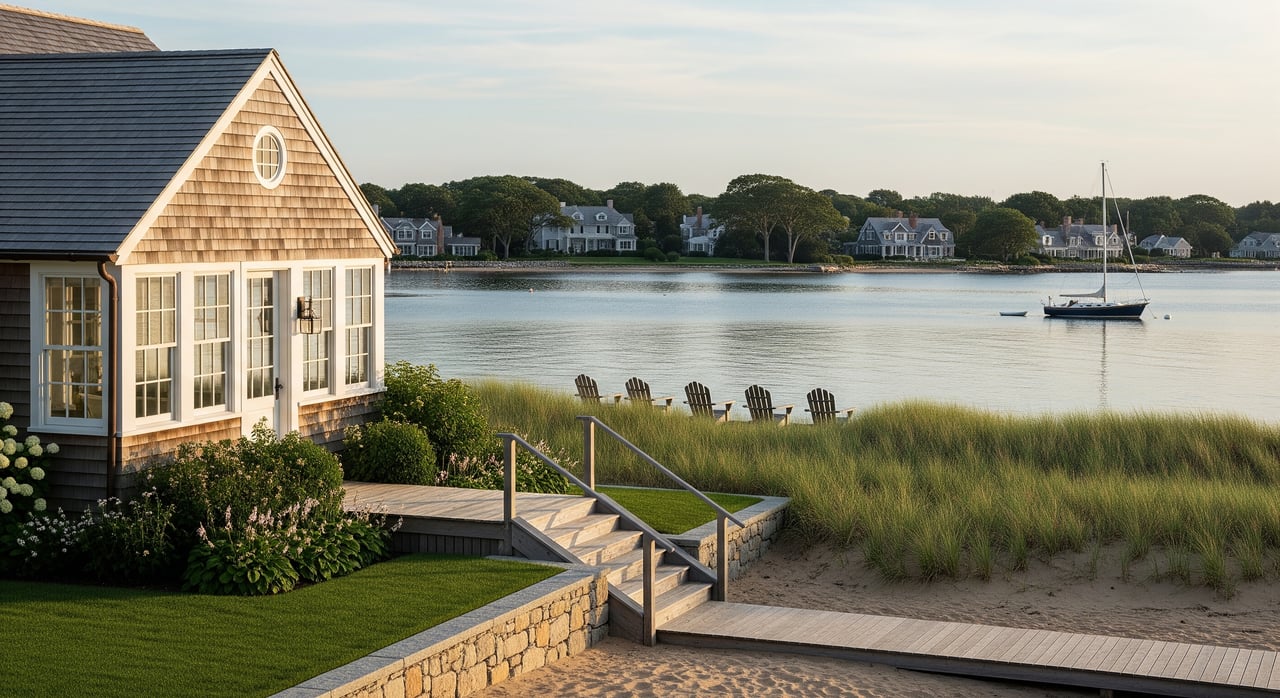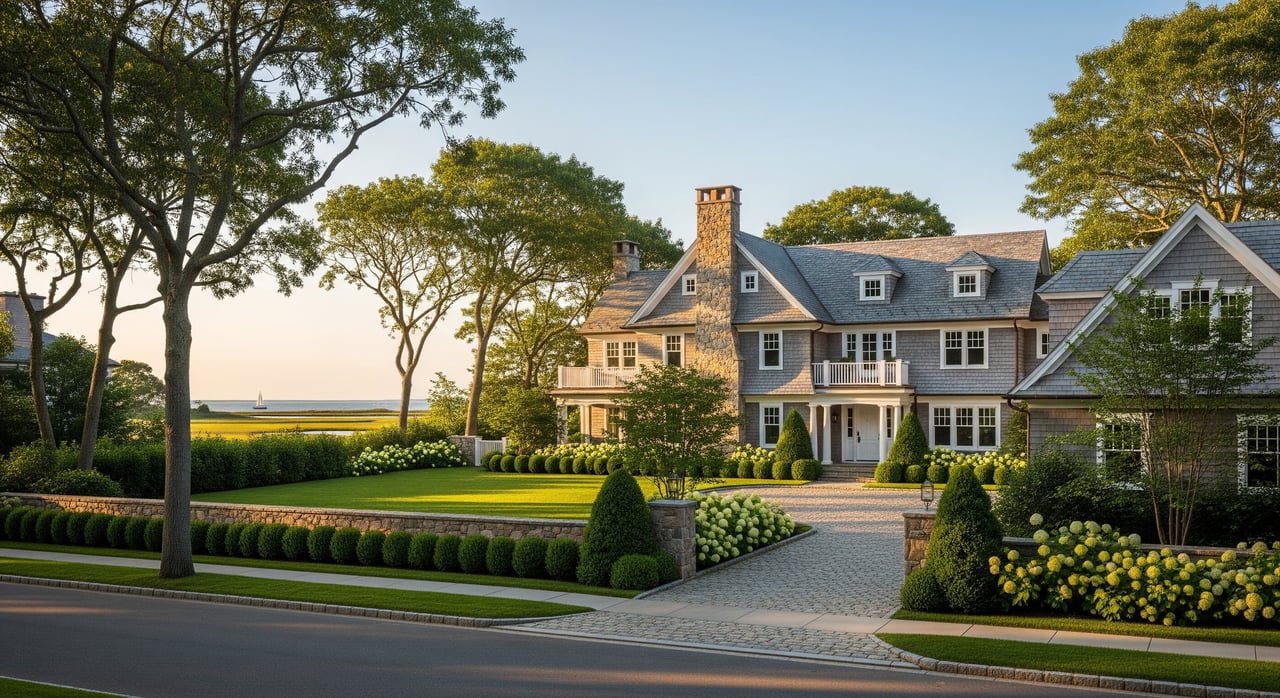
Torn between Old Greenwich and Riverside? You are not alone. These neighboring coastal villages in Greenwich offer different daily rhythms, commute options, and housing styles, all within the same town services. In this guide, you will get a clear, side-by-side look at lifestyle, transportation, housing, and practical factors like taxes, zoning, and flood risk. Let’s dive in.
Quick vibe check
Old Greenwich at a glance
Old Greenwich often feels like a classic New England village with a small, walkable commercial strip and a visible center of shops and restaurants. You will find a compact, lively hub that makes errands and coffee runs simple. Waterfront access is close by, and many streets emphasize a traditional village character. For a bigger selection of shopping and services, downtown Greenwich is an easy drive.
Riverside at a glance
Riverside is typically quieter and more residential, with smaller commercial nodes instead of one main street. You will see pockets of waterfront homes and access to marinas. The atmosphere often leans more suburban, while still keeping you close to Long Island Sound and town amenities. Like Old Greenwich, you are minutes from downtown Greenwich for broader dining and retail.
Commute and convenience
Rail and road options
Both villages have their own Metro-North stations on the New Haven Line with direct service to points west and Grand Central Terminal. Parking, permit availability, and peak versus off-peak schedules vary by station, so plan to check current details before you decide. By car, each area offers convenient access to I-95 and the Post Road, with routes to the Merritt Parkway based on your exact location.
Walkability and everyday errands
If you want a stronger main-street feel, Old Greenwich generally offers a more concentrated cluster of shops and dining. Riverside’s conveniences are spread across smaller centers, which many residents appreciate for the quieter setting. In either village, larger errands are a short hop to downtown Greenwich.
Schools and childcare
One district, different boundaries
Both villages are served by Greenwich Public Schools within a single district. Elementary attendance boundaries can change, so it is important to confirm which school serves a specific address and to review the most recent performance data from official state and district sources. You will also find pre-K, daycare, and private or parochial options nearby; availability and capacity shift seasonally, so verify current openings.
Housing and pricing patterns
What you will see on the market
Single-family homes are most common in both villages, along with some duplexes, small multi-family buildings near village centers, and select condominiums close to transit or the waterfront. Architectural styles span Colonial, Cape Cod, shingle-style, mid-century ranches, and newer rebuilds. Many properties pre-date WWII, and you will notice steady redevelopment with tear-downs and new construction.
What drives price
- Proximity to the water, Sound views, and private docks can command significant premiums.
- Being near the village center or train station often raises value for buyers prioritizing walkability and commute ease.
- Lot size, privacy, school boundaries, and neighborhood aesthetics influence price, especially for move-up buyers.
- Renovated and new construction homes with modern layouts and finishes typically sell at a premium.
Waterfront lifestyle and flood risk
Enjoyment and due diligence
Access to Long Island Sound, marinas, and boating is a shared draw in both villages. If waterfront living is on your list, build in time to review current flood maps, elevation, and mitigation features. Flood zones can affect insurance costs, mortgage requirements, renovation plans, and long-term carrying costs, so factor this into your budget and timeline early.
Property taxes, zoning, and change
What to check before you buy
Greenwich uses a single town mill rate for both villages, and tax bills reflect property values across the market. Review recent assessor records for any property you are considering to understand assessments and how they compare to sale prices. Zoning is handled at the town level, with rules for setbacks, lot coverage, and coastal site review in some areas. Track local Planning & Zoning agendas for potential projects along the Post Road, near the train stations, or on waterfront sites that could affect traffic, streetscape, or supply over time.
Side-by-side comparison checklist
Commute
- Identify the closest station and current parking options.
- Compare peak and off-peak train schedules for your typical commute.
- Map your daily driving route to major highways and test it at rush hour.
Schools
- Confirm the elementary school for the specific address.
- Review the latest district and state performance reports.
- Ask about after-school programs and nearby childcare capacity.
Housing and value
- Note typical styles and ages on the blocks you like.
- Compare renovated vs. to-be-updated homes in your price range.
- Ask for recent comps within the last 6–12 months for a tight radius.
Village amenities
- List your must-have shops and services within a 10-minute radius.
- Walk the area at different times to gauge traffic and pace.
- Check seasonal community events and hours for local businesses.
Walkability and station access
- Measure the distance from the property to the village center or train.
- Test school drop-offs, grocery runs, and evening returns.
- Consider sidewalks, lighting, and key crossings on your route.
Waterfront and flood considerations
- Confirm flood zone status and elevation for the property.
- Estimate flood and homeowner’s insurance with a licensed carrier.
- Review any shoreline or drainage improvements on or near the site.
Taxes and permitting
- Pull recent tax bills and the current town mill rate.
- Ask about recent or planned renovations and permits.
- Clarify what future additions or rebuilds may be allowed under zoning.
Future outlook
- Scan recent Planning & Zoning agendas for nearby proposals.
- Watch for any train station or parking changes under consideration.
- Track commercial or multifamily plans that could add amenities or traffic.
How to choose: a quick self-test
- If you want a lively village center and a compact main-street experience, lean toward Old Greenwich.
- If you value a quieter, more residential setting with small commercial pockets, consider Riverside.
- If your top priority is a consistent rail commute, compare both stations’ parking and schedules at your exact times.
- If you are weighing waterfront access, build in time for flood, insurance, and coastal review research.
- If you prefer newer construction or turnkey finishes, ask for recent comps showing price differences by renovation level in each village.
Smart next steps
- Visit both villages on a weekday morning, late afternoon, and weekend to feel the real rhythm.
- Ride Metro-North from each station during your target commute time.
- Walk from a few listings to coffee, groceries, and the station to test daily life.
- Confirm school boundaries with the district and review the latest performance data.
- Review FEMA flood maps and discuss insurance with a licensed professional.
- Request a current MLS snapshot for each village: 6–12 month sales, days on market, and price per square foot.
Ready to compare specific homes, walk the blocks, and weigh tradeoffs like a local? Connect with Nora Giovati for tailored guidance, on-the-ground insights, and a curated shortlist that fits your lifestyle.
FAQs
Which village is better for NYC commuters?
- Both Old Greenwich and Riverside have Metro-North stations with direct service to Grand Central; compare current schedules and parking options for your exact commute times.
How walkable are Old Greenwich and Riverside for daily errands?
- Old Greenwich generally offers a more concentrated main street for quick errands, while Riverside provides smaller commercial nodes with a quieter residential feel.
What should buyers know about flood zones in eastern Greenwich?
- Parts of both villages sit in coastal flood zones; verify FEMA maps, elevation, mitigation features, and insurance implications for any specific property before you bid.
How do public schools work for Old Greenwich and Riverside addresses?
- Both villages are in Greenwich Public Schools; confirm the elementary school serving a specific address and review the most recent district and state performance data.
Are there new developments planned near the stations or Post Road?
- Plans can change; monitor town Planning & Zoning agendas for proposals that could affect traffic, amenities, parking, or overall village character.
Is Riverside more affordable than Old Greenwich right now?
- Prices in both villages are high relative to wider averages, and values vary by location, condition, and features; ask for up-to-date MLS comps to compare specific properties.